Lasting Impacts
The population of Japanese Americans in San Francisco was only 300 people higher in 1950 than it was a decade prior, incongruous with previous booms of Japanese American population into this area. Neighborhoods previously occupied by Japanese communities were occupied by African Americans who traveled north for work during the WW2, and left Japanese Americans returning from camps displaced. This permanently altered the Japantown in San Francisco, reducing the area from twenty city blocks to six.
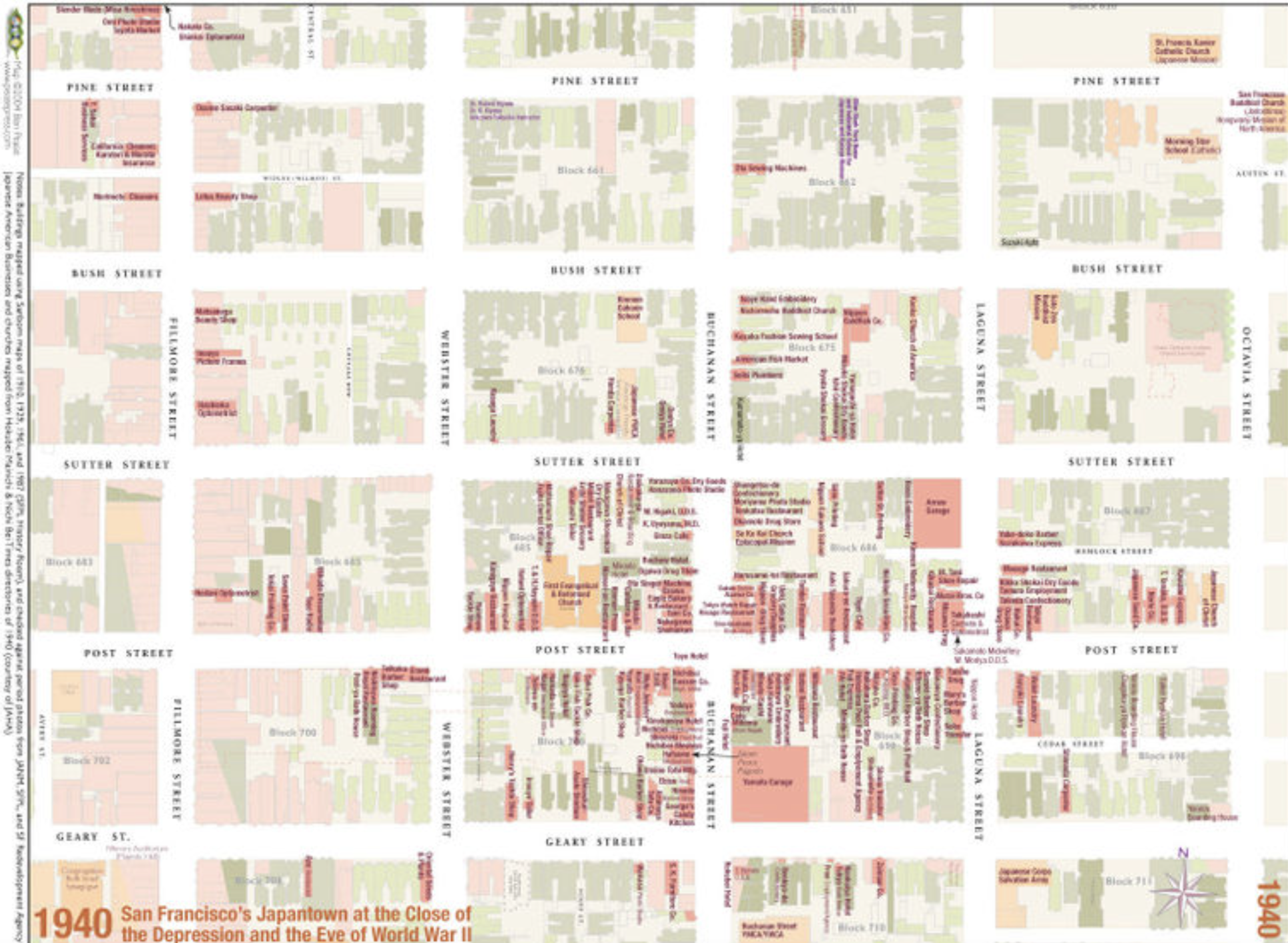
San Francisco’s Japantown in 1940. Image courtesy of FoundSF.
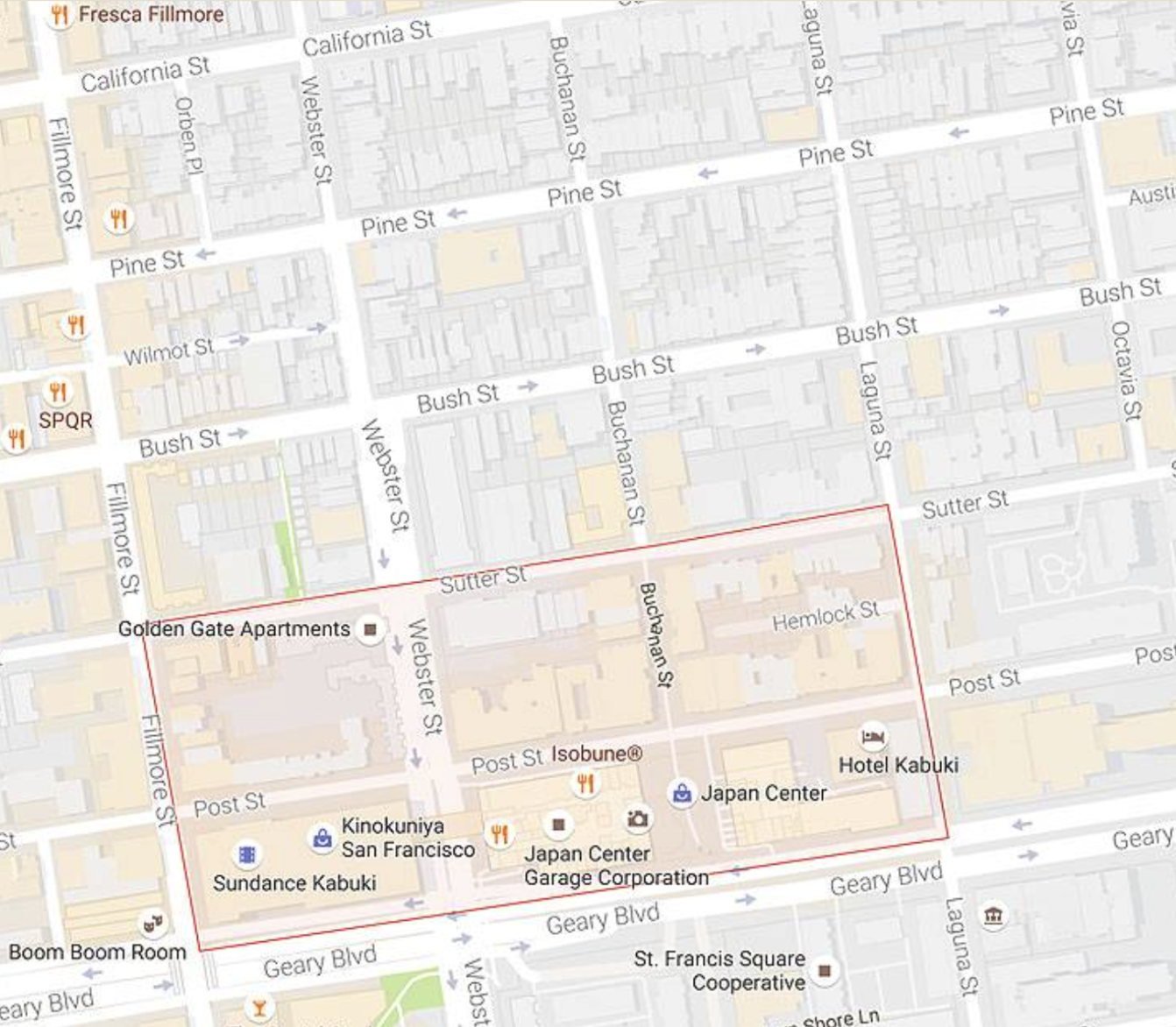
San Francisco’s Japantown in 2016. Image courtesy of FoundSF.
Published in American Psychologist, “The Japanese American Wartime Incarceration: Examining the Scope of Racial Trauma”, examines how being unjustly imprisoned was traumatic, and how it solidified the psyches of many that they were "not American". Some recall thinking “I felt like a second-class citizen, but it really confirmed, it really emphasized that I didn’t belong in this country, that my face, my yellow face made the difference and I will never belong”.
In our society today, the treatment of Japanese Americans set a precedent for the treatment of Muslim Americans and other migrant peoples in the 21st century, including the failure of the U.S. to properly address mistreatment of other peoples of color who have been brutalized, displaced, and subjugated, such as Black and Native Americans.