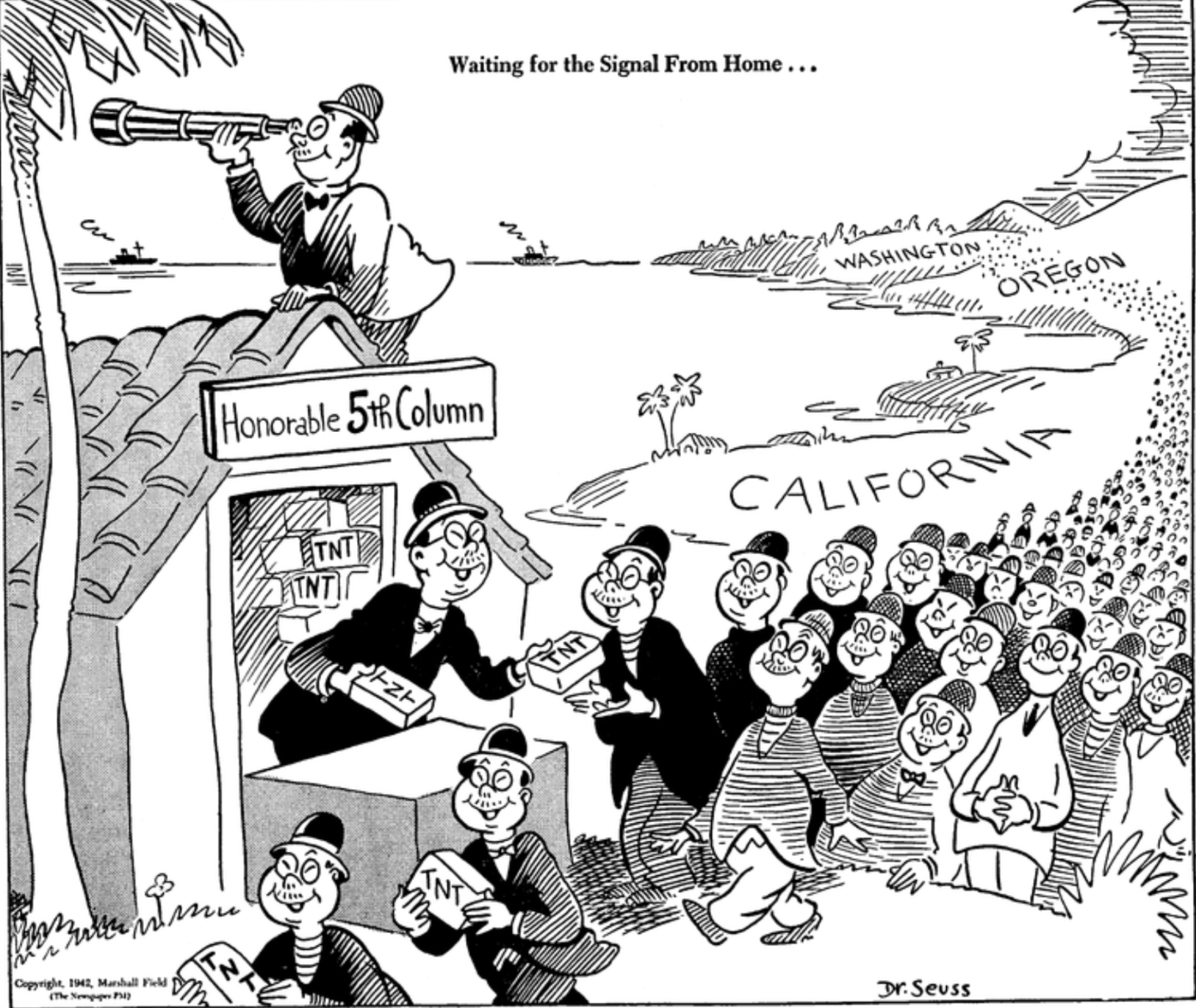
Waiting for the Signal From Home... Image courtesy of Dr. Seuss.
Many Americans called for the internment of Japanese Americans.
"No Japanese wanted - except in concentration camps."
- San Francisco News, March 2, 1942, "New Order on Aliens Waited"
In the same newspaper, Arthur Caylor writes, “The Japanese colony and the Negro colony in San Francisco are close enough neighbors to provide many contacts … It’s not nice to think that Japanese agents should be trying to stir up strife right in our own town—and at a time when the Japanese problem may mean such tragedy for loyal Japanese-Americans. But if you don’t think such things can go on, who do you suppose is tearing down air-raid shelter signs and defacing other notices designed to prevent confusion and save lives? Now is the time for Jap spies to do their stuff."
“But right now, when the Japs are planting their hatchets in our skulls, it seems like a hell of a time for us to smile and warble: "Brothers!" It is a rather flabby battlecry. If we want to win, we’ve got to kill Japs, whether it depresses John Haynes Holmes or not.”
- Dr. Seuss
Waiting for the Signal From Home... Image courtesy of Dr. Seuss.
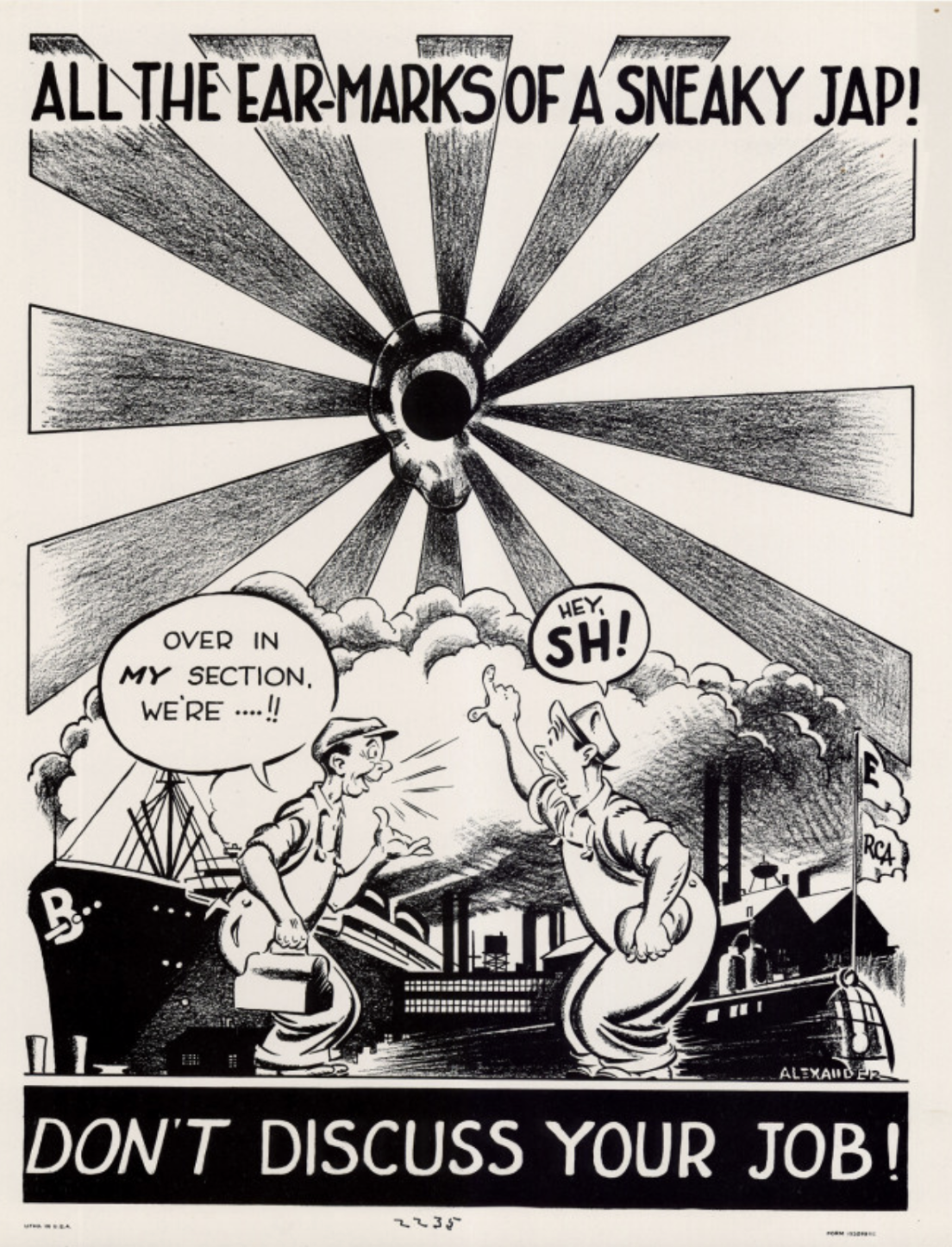
All the ear-marks of a sneaky Jap! Don’t discuss your
job! 1942. Image courtesy of U.S. War Production Board.
The US War Production Board furthered the narrative that Japanese Americans were spies, worsening the paranoia surrounding Japanese Americans.
Satoshi Hibi recalls the anti-Japanese hate he faced following the attack on Pearl Harbor.
"I remember losing all my friends. Their parents said don't go there. I was picked on, beaten up at school."
- Santoshi Hibi, interview with KTVU FOX 2 San Francisco
The attack on Pearl Harbor reinforced and invigorated stereotypes of Japanese Americans held before WW2, and fueled a push for the removal of Japanese American rights.